Tag: Timing of Enrollment

  • Still Working at 65? Do You Need Medicare?

    Turning 65 does not automatically mean you need to retire.

    Many people continue working and remain covered under an employer health plan. The question most people ask is simple. Do I need Medicare if I’m still working?

    The answer depends on how your employer coverage coordinates with Medicare. Getting that coordination wrong can create coverage gaps or permanent penalties.

    Clarity before enrolling makes the difference.

    How Medicare and Employer Coverage Work Together

    Original Medicare has two main parts: Part A (hospital care) and Part B (medical services).

    If you are still working and covered under an employer plan, the size of your employer determines which coverage pays first. This detail is critical

    .

    The First Thing to Confirm: Employer Size

    Employer size determines which coverage pays first

    If Your Employer Has 20 or More Employees

    20+

    Employer 20+ Employees

    Primary: Employer Plan
    Secondary (if enrolled): Medicare

    If your employer has 20 or more employees, the group health plan typically pays first.

    In many cases, you may delay Part B without penalty as long as you are actively covered under that employer plan.

    Before delaying, confirm:

    • The coverage is considered creditable
    • You are actively employed (not COBRA or retiree coverage)
    • The employer plan is primary

    Verification is essential. Assumptions are where mistakes happen

    If Your Employer Has Fewer Than 20 Employees

    <20

    Employer Fewer Than 20 Employees

    Primary: Employer Plan
    Secondary (if enrolled): Medicare

    If your employer has fewer than 20 employees, Medicare generally becomes primary at age 65.

    If you do not enroll in Medicare in this situation:

    • Claims may be denied
    • Coverage gaps may occur
    • You may face late enrollment penalties

    This is one of the most common and costly misunderstandings for people working past 65. It is easier to prevent this mistake than to fix it later.

    Before You Delay Part B

    Before postponing enrollment, confirm:

    • You are covered under active employment (not COBRA or retiree coverage)
    • The employer plan qualifies as creditable coverage
    • Medicare enrollment can be delayed without penalty

    COBRA and retiree coverage do not allow you to delay Part B without risk of penalty.

    Verification protects you from irreversible mistakes.

    Review Part A and HSA Impact

    Part A is often premium-free for people who have worked and paid Medicare taxes long enough. Because of this, many people enroll in Part A even while continuing to work.

    However, enrolling in Part A can affect your ability to contribute to a Health Savings Account (HSA).

    If you are contributing to an HSA, review how Medicare enrollment impacts those contributions before enrolling. Timing matters.

    Compare Total Financial Exposure, Not Just Premiums

    Some employer plans are stronger than Medicare options.
    Others are not.

    Before delaying enrollment, compare:

    • Monthly premiums
    • Deductibles
    • Copays and coinsurance
    • Out-of-pocket maximums
    • Prescription coverage

    Once coordination rules are confirmed,  then you compare total financial exposure.

    If you want a structured approach to evaluating overall cost exposure, review how to estimate your total Medicare costs before making changes.

    When You Can Delay Enrollment

    You may delay Part B without penalty if:

    • You are covered under your own active employer plan
    • You are covered under your spouse’s active employer plan
    • The employer meets size requirements
    • The coverage is creditable

    When that employer coverage ends, you generally qualify for a Special Enrollment Period (SEP).

    You typically have eight months to enroll in Part B without penalty.

    That window does not last indefinitely. Acting within it protects you from long-term consequences.

    Working at 65: Common Medicare Mistakes

    • Assuming employer coverage replaces Medicare
    • Ignoring employer size rules
    • Delaying Part B without confirmation
    • Enrolling in Part A without reviewing HSA impact
    • Missing the Special Enrollment Period

    Most problems are not caused by complicated rules.

    They are caused by incomplete coordination between employer coverage and Medicare.

    What to Review Before Making a Decision

    Still Working at 65? Review This First

    • Confirm employer size
    • Verify primary vs secondary payer
    • Confirm creditable coverage
    • Review HSA impact (if applicable)
    • Map out retirement timing
    • Understand your Special Enrollment Period

    Reviewing these details before enrolling prevents permanent mistakes.

    A Structured Review Protects You

    Continuing to work at 65 gives you flexibility.
    It also adds complexity.

    The right decision depends on:

    • Employer size
    • Active vs retiree coverage
    • HSA contributions
    • Retirement timeline
    • Long-term cost exposure

    If you want clarity before making changes, a structured Medicare planning review can help you:

    • Confirm whether you should enroll now
    • Avoid lifetime penalties
    • Coordinate employer coverage properly
    • Protect your future enrollment window

    Medicare sets the coordination rules.
    I help you apply those rules to your situation before you make a permanent decision.

    If you are still working at 65 and want to review your situation step by step, schedule your Medicare planning review.


  • Medicare Enrollment Periods Explained Simply

    Know your window. Enroll correctly. Avoid penalties.

    One of the biggest sources of confusion around Medicare is enrollment timing.

    There is not just one deadline. There are multiple enrollment periods, each with different rules.

    Understanding which one applies to you prevents penalties, delayed coverage, and unnecessary stress.

    Initial Enrollment Period (IEP)

    The Initial Enrollment Period applies when you first become eligible for Medicare at age 65.

    • Three months before the month you turn 65
    • Includes your birth month
    • Ends three months after

    If you enroll early in your IEP, coverage typically begins the month you turn 65. Waiting until later months can delay your start date.

    If you miss this window and do not qualify for another enrollment period, penalties may apply.

    Special Enrollment Period (SEP)

    A Special Enrollment Period allows you to enroll outside your Initial Enrollment Period without penalty.

    This commonly applies when Part B was delayed due to qualifying employer coverage.

    When that employer coverage ends, you typically have eight months to enroll in Part B without penalty.

    COBRA and retiree coverage do not extend your Special Enrollment Period the same way active employment does.

    Understanding when your SEP begins and ends protects you from avoidable penalties.

    Annual Enrollment Period (AEP)

    The Annual Enrollment Period runs from October 15 through December 7 each year.

    This period is for people already enrolled in Medicare.

    During AEP, you may:

    • Switch Medicare Advantage plans
    • Move from Medicare Advantage back to Original Medicare
    • Change Part D prescription drug plans

    Changes take effect January 1 of the following year. This period is not for enrolling in Part B for the first time.

    General Enrollment Period (GEP)

    The General Enrollment Period applies to individuals who:

    • Missed their Initial Enrollment Period
    • Do not qualify for a Special Enrollment Period

    It runs from January 1 through March 31 each year.

    Coverage may be delayed, and late enrollment penalties may apply.

    This is typically not the preferred enrollment path. It is the corrective one.

    Medicare Advantage Open Enrollment Period (OEP)

    The Medicare Advantage Open Enrollment Period runs from January 1 through March 31 each year.

    This period applies only to individuals who are already enrolled in a Medicare Advantage plan.

    During OEP, you may:
    • Switch to another Medicare Advantage plan
    • Drop Medicare Advantage and return to Original Medicare
    • Add a Part D drug plan if returning to Original Medicare

    You may make only one change during this period.

    This is not the same as the General Enrollment Period.
    It does not allow late enrollment into Part B without penalty.

    Why Timing Matters

    Title: “Why Enrollment Timing Matters”

    • Late enrollment penalties can permanently increase premiums
    • Delayed enrollment can create coverage gaps
    • Missing a Special Enrollment window removes flexibility
    • Incorrect timing often leads to rushed decisions

    Enrollment problems typically occur when the wrong enrollment period is used.

    Knowing your window gives you control.

    How to Identify Your Enrollment Window

    Medicare enrollment is not complicated once you know which window applies to you.

    The challenge is that the rules shift depending on:

    • Employment status
    • Coverage type
    • Age
    • Prior enrollment decisions

    A structured Medicare planning review helps you:

    • Identify your correct enrollment window
    • Confirm deadlines
    • Avoid permanent penalties
    • Coordinate plan changes properly

    When enrollment timing is handled correctly, the rest of your Medicare decisions become much easier.

    If you are unsure which enrollment period applies to you, schedule your Medicare planning review and clarify your next step before deadlines become a problem.

  • What Happens If You Miss Your Medicare Enrollment?

    What Happens If You Miss Your Medicare Enrollment?

    Missing a Medicare enrollment deadline can lead to higher premiums, delayed coverage, and fewer options.

    In some cases, penalties last as long as you have Medicare.

    Most missed enrollments are not intentional.
    They happen because someone misunderstood which enrollment window applied.

    The key question is not panic.

    The key question is:
    Which window still applies to you now?

    Part B Late Enrollment Penalty

    If you do not enroll in Part B during your Initial Enrollment Period and do not qualify for a Special Enrollment Period, you may face a late enrollment penalty.

    The penalty is generally:

    • 10% of the standard Part B premium
    • For every full 12-month period you were eligible but did not enroll

    In most cases, this increased premium lasts as long as you have Part B.

    This is not a one-time fee.
    It becomes part of your monthly premium.

    Part D Late Enrollment Penalty

    If you go 63 consecutive days or more without creditable prescription drug coverage after becoming eligible, you may face a Part D penalty.

    Even if you take few or no medications now, delaying drug coverage can create long-term cost increases.

    The penalty is added to your drug plan premium and generally continues long term.

    Delayed Coverage & Enrollment Restrictions

    If you missed your Initial Enrollment Period and do not qualify for a Special Enrollment Period, you may need to wait for the General Enrollment Period.

    This can result in:

    • Delayed coverage start dates
    • Months without medical or drug coverage
    • Higher lifetime premiums

    The impact is not just financial.
    It can affect access to care.

    Situations Where You May Still Avoid Penalties

    You may qualify if:

    • You were covered under active employer health insurance
    • You recently lost employer coverage
    • You experienced a qualifying life event
    • You can document creditable prior coverage

    Documentation is often required. Special Enrollment Period rules are time sensitive.

    This is where many people assume they are penalized when they may still have options.

    Verification matters.

    What To Do Immediately

    Title: “If You Missed Enrollment Take These Steps”

    1. Confirm whether you truly missed all enrollment windows
    2. Confirm whether prior coverage was creditable
    3. Identify whether a Special Enrollment Period applies
    4. Determine the next available enrollment opportunity
    5. Clarify whether penalties apply and for how long

    Acting quickly limits long-term consequences. Delays can reduce available options.

    Can It Be Fixed?

    Sometimes.

    If you had qualifying coverage and can document it, penalties may be avoided.

    If not, you may need to enroll during the General Enrollment Period and accept adjusted premiums.

    The earlier the situation is reviewed, the more flexibility usually exists.

    Frequently Asked Questions

    Will I have to pay a penalty forever?

    In many cases, late enrollment penalties are added to your premiums for as long as you have Medicare.

    Can I enroll outside GEP or SEP?

    Only if a qualifying life event triggers a Special Enrollment Period.

    What if I’m still working?

    Active employer coverage may allow you to delay Medicare without penalty if structured correctly.

    The Real Risk

    The biggest mistake is assuming there is nothing you can do.

    The second biggest mistake is waiting too long to review your situation.

    Most enrollment errors can be clarified quickly once your timeline is mapped properly.

    Structured Review Prevents Permanent Damage

    If you missed your Medicare enrollment, the solution is not guessing.

    It is reviewing:

    • Your eligibility timeline
    • Your prior coverage
    • Your current enrollment status
    • Your next available window

    A structured Medicare review determines:

    • Whether penalties apply
    • Whether they can be avoided
    • What your next correct step is

    If you are unsure whether you missed a deadline or qualify for an enrollment period, schedule your Medicare planning review promptly.

  • Turning 65? Here’s What You Need to Know About Medicare

    Turning 65? Here’s What You Need to Know About Medicare

    What Happens With Medicare When You Turn 65

    Turning 65 is big milestone.

    It comes with some new perks like travel discounts, hotel savings, and other benefits. But it also opens an important window for decisions about your health coverage.

    The choices you make can carry long term financial consequences.

    Some people are enrolled automatically. Others are not.

    Some can delay enrollment without a penalty. Others need to enroll on time to avoid one.

    What applies depends entirely on your situation.

    Understanding your options before this window closes matters. It can help you avoid unnecessary costs, coverage gaps, and headaches down the road.

    Understand Your Enrollment Window

    Missing this window can trigger permanent penalties

    When someone turns 65, one of the first things I explain is their Initial Enrollment Period, or IEP.

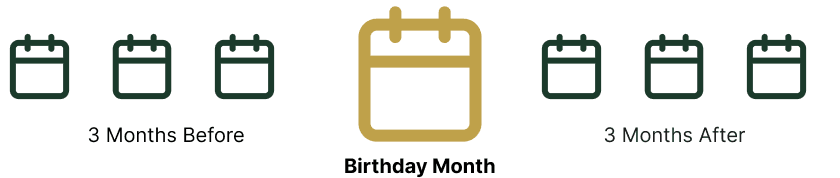
    It’s a seven month window. It starts three months before your 65th birthday, includes your birthday month, and continues for three months after.

    This is your first opportunity to enroll in Medicare Part A and Part B without late enrollment penalties.

    Here’s what most people don’t realize. The month you enroll determines the month your coverage starts.

    If you enroll before your birthday month, your coverage typically starts the month you turn 65. If you wait until later in the window, your start date can be delayed.

    If that window closes and you do not qualify for a Special Enrollment Period, there can be long term consequences. That can mean permanent late enrollment penalties, delayed coverage, and higher premiums for life.

    The timing matters more than most people expect.

    Do You Need to Enroll at 65?

    You Likely Need to Enroll

    You May Be Able to Delay

    You do not have active creditable coverage

    You have active coverage through an employer

    You are retiring at or before 65

    Covered under a spouse’s employer plan

    Your current coverage will end at 65

    You have other qualifying creditable coverage

    Always verify that your coverage is considered creditable before delaying enrollment.

    Not everyone needs to enroll in Medicare at 65. Your next step depends on the coverage you have right now.

    Before deciding to delay enrollment, there are two things to confirm. Is your current coverage considered creditable under Medicare rules? When you turn 65, which coverage pays first and which pays second?

    Getting this wrong can trigger lifetime late enrollment penalties or gaps in coverage. Understanding how your current coverage coordinates with Medicare is essential.

    Common Medicare Mistakes

    • Waiting too long to enroll
    • Assuming Medicare is free
    • Ignoring prescription coverage
    • Choosing based only on premium
    • Not confirming how current coverage works

    If You’re Approaching 65

    • Confirm your enrollment window
    • Verify whether you are automatically enrolled
    • Review how your current coverage coordinates with Medicare
    • Estimate your total annual cost exposure
    • Look at more than just the monthly premium.

    Get It Right the First Time

    If you are within six months of turning 65, this is the right time to review your options.

    For official program details and updated cost information, visit Medicare.gov. Premiums, deductibles, and coverage rules can change from year to year, so reviewing current information matters.

    Medicare explains the rules. I help you apply those rules to your situation.

    Medicare is not just about enrolling. It is about setting your coverage up correctly for the years ahead.

    If you want clarity before making a decision, I can help you:

    When you set it up correctly from the start, you avoid expensive fixes later.